
From evidence of testing to evidence of confidence.
Quality Intelligence is the intelligence layer that connects engineering signals, business context, risk, prediction and assurance so teams can make better release decisions.
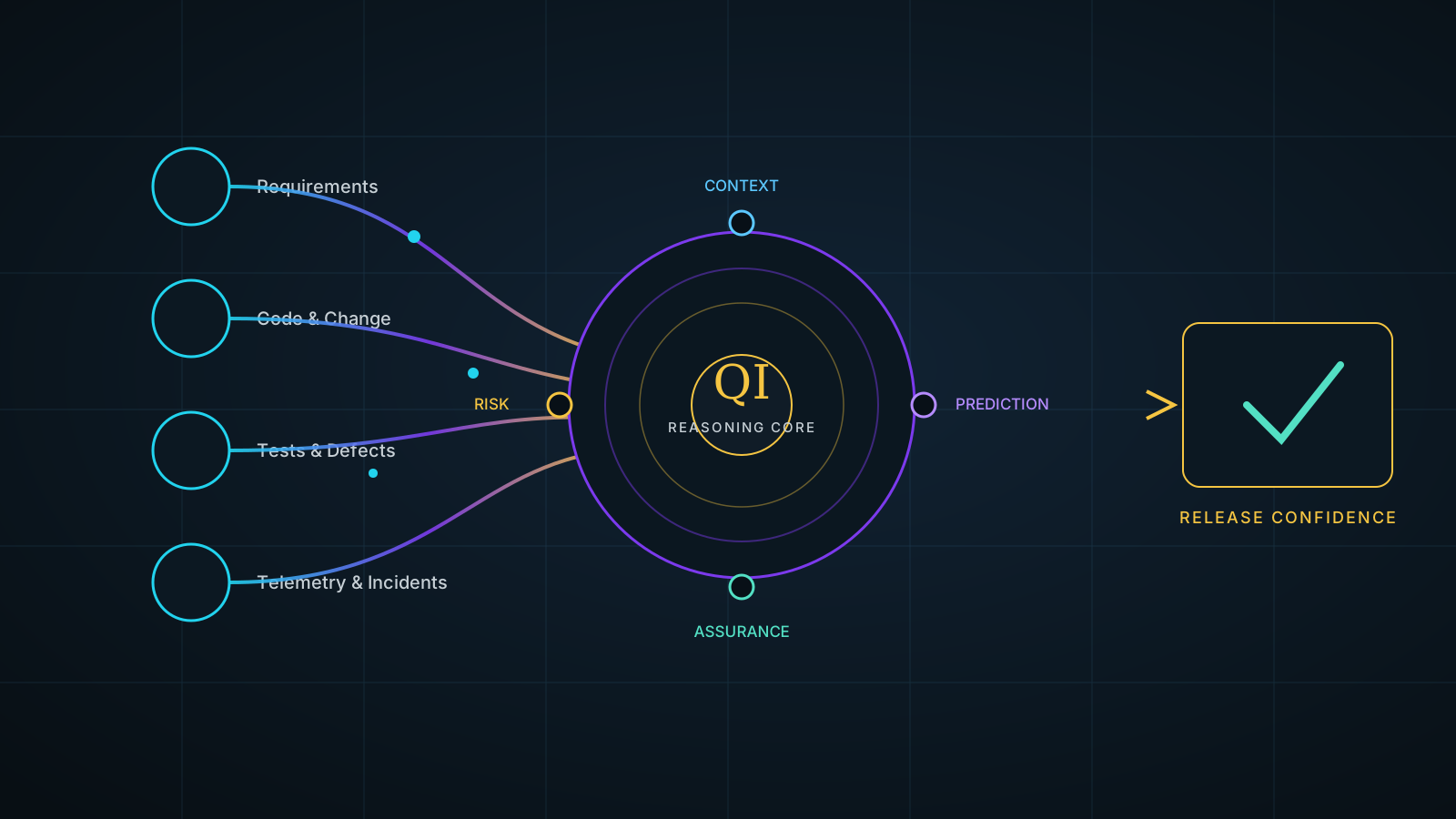
Quality data is abundant. Quality decisions are still fragmented.
Most enterprises already have test results, defects, observability data, code-change data, production incidents, and business metrics. The problem is not always a lack of data. The missing layer is the reasoning that connects those signals into a coherent view of risk.
How many tests passed?
Useful, but narrow. It reports execution rather than explaining confidence.
What is most likely to fail—and why?
Combine change, dependency, historical evidence, usage and business impact.
Are there open defects?
A defect list does not automatically express release risk or operational consequence.
Do we have enough evidence to release?
Make confidence traceable to provenance, coverage, risk, evaluation and real system behavior.
A confidence system, not another testing dashboard.
Each pillar answers a different decision question—from where quality attention should go to whether the available evidence justifies a release.
Predictive Failure
Use patterns and signals to anticipate instability before it becomes an incident.
Provenance
Make every confidence statement traceable to the evidence and context behind it.
AI Assurance
Evaluate probabilistic systems across reliability, safety, behavior and context.
Release Confidence
Synthesize fragmented evidence into a clear, defensible position on readiness.
Observe → Understand → Predict → Assure → Learn
Make quality smarter. Make AI trustworthy.
Enterprises increasingly need AI to transform Quality Engineering—and Quality Engineering to assure AI. Quality Intelligence is where those two needs converge.
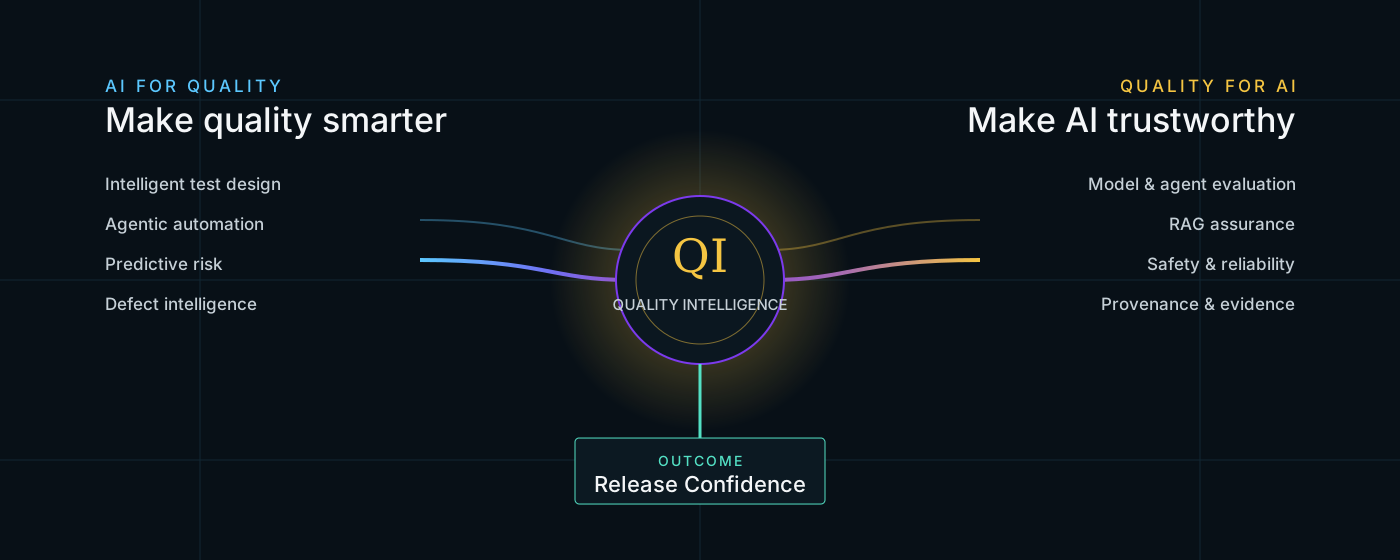
Quality Intelligence sits above tools—not instead of them.
It should connect the existing engineering ecosystem and create a reasoning layer across evidence rather than force every team into a single testing stack.
If quality could reason across your engineering evidence, what decision would you want it to make better?
Explore the experiments behind the model—or start a conversation about the quality problem you are trying to solve.